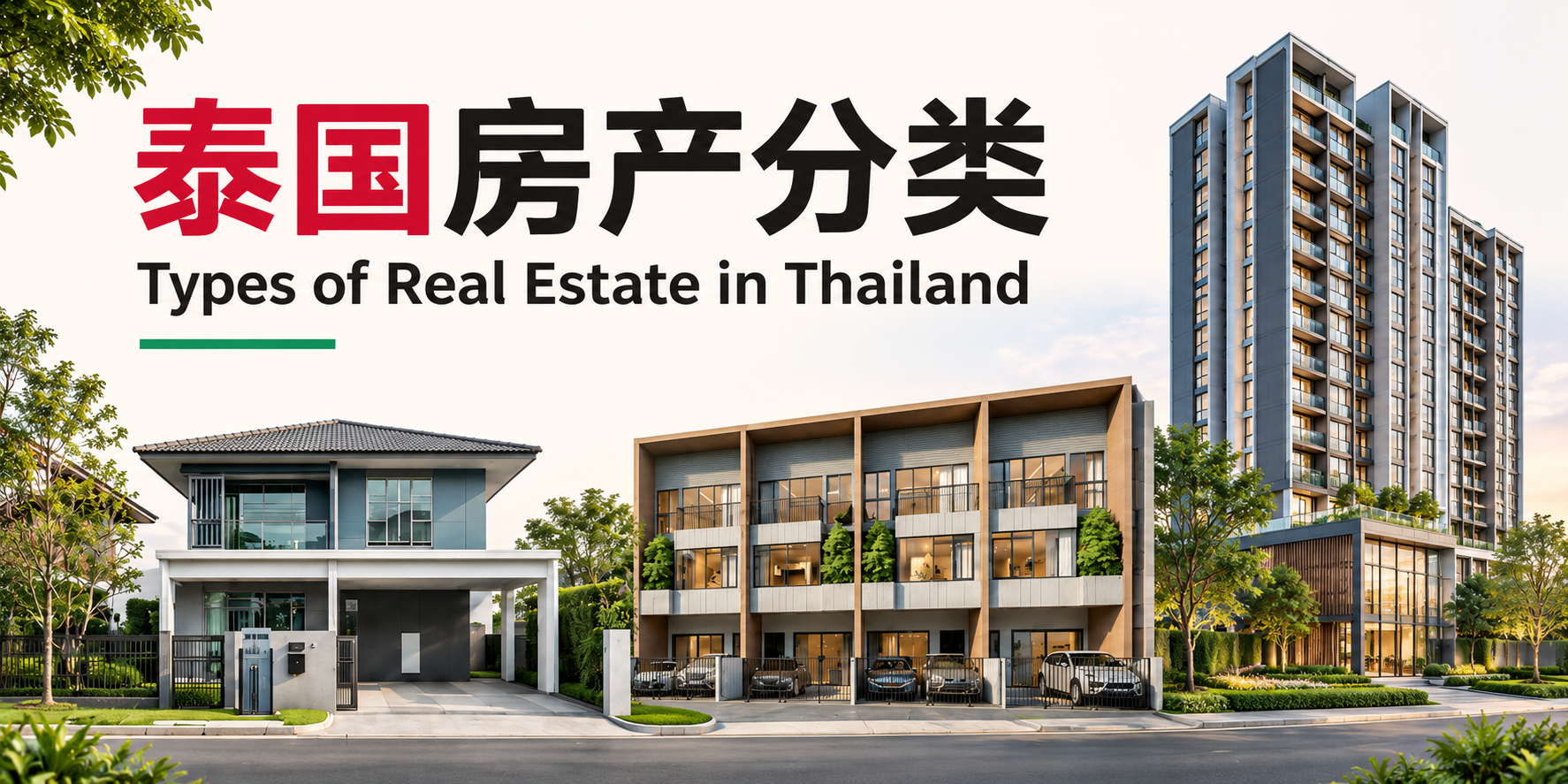
Before renting, buying, or investing in Thailand, check what kind of property you are looking at. A condominium and a rental apartment may look similar in a listing, but ownership, management, and utility billing can differ. This guide covers common apartment buildings, low-rise homes, and street-facing commercial buildings.
Thai developers often group projects into vertical developments (อสังหาฯ แนวดิ่ง) and low-rise developments (อสังหาฯ แนวราบ). Vertical developments typically include multi-unit apartment buildings. Low-rise developments include detached, semi-detached, and terraced homes. Condominium projects can also be low-rise. Registration and ownership are the practical distinction between a condominium and a rental apartment.
Condominiums and rental apartments
Condominium (อาคารชุด)
In a registered condominium, each unit has its own title deed (หนังสือกรรมสิทธิ์ห้องชุด). Unit owners own their individual units and hold a registered share of the common property, including land. This is why building notices refer to them as co-owners (เจ้าของร่วม). For proof of unit ownership, check the unit title deed. The house registration book records address information. Thailand Department of Lands: Condominium Act
The condominium juristic person manages the common property. Facilities may include lifts, a lobby, parking, a pool, and a gym. Access and building rules vary by project. Condominiums come in both low-rise and high-rise developments, and some offer duplex or split-level units.
Rental apartment (อะพาร์ตเมนต์)
A rental apartment building is typically let by a single owner or operator. Tenants occupy their rooms under a lease, and the rooms generally do not have individually transferable condominium titles. Facilities, furnishings, and lease lengths vary. Serviced apartments (เซอร์วิสอะพาร์ตเมนต์) may include housekeeping or other services. Check what the rent covers.
How are utilities billed?
Condominium electricity is often billed through an individual meter, while building management may collect water charges. Rental apartment operators often read the meters and collect utility payments themselves. Ask for a sample bill and check the rate, meter readings, payee, and other charges. For operators covered by Thailand’s 2025 residential lease contract rules, water and electricity charges must use rates no higher than those charged to the operator by the utility providers, and the contract must explain the calculation. Office of the Consumer Protection Board: residential rental guidance
Low-rise homes and commercial buildings
Detached house (บ้านเดี่ยว)
A detached house stands apart from neighbouring homes. Two-storey layouts with several bedrooms, a living room, and a kitchen are common. Some have private gardens or parking. Compare the plot size and the indoor floor area separately, and check who maintains the garden.
Semi-detached house (บ้านแฝด)
Two homes are built as a pair and joined on one side. Each typically has its own entrance, and plots are often smaller than those of detached homes. At a viewing, check the shared boundary, natural light, sound insulation, and parking.
Townhouse (ทาวน์เฮาส์)
Townhouses are built in rows, with neighbouring homes usually sharing a wall. Developers may also call them townhomes. Several floors can provide more interior space on a compact plot. Compare stairs, daylight, and parking, and check how the end and middle units differ.
Commercial building and home office (อาคารพาณิชย์ / โฮมออฟฟิศ)
A street-facing shophouse is often a multi-storey building with a shop at ground level and office or living space above. Home office usually describes a property designed with workspace. Before opening a shop, operating an office, or installing signage, check the building’s approved use, project rules, and lease terms. Inspect parking and loading access in person.
Plot sizes in Bangkok land subdivision projects
Clause 11 of Bangkok’s 2022 residential and commercial land subdivision requirements sets a minimum of 50 square wah (200 m²) for detached-house plots that meet the specified dimensions. It lists 35 square wah (140 m²) and an 8 m minimum width per semi-detached plot, and 16 square wah (64 m²) and a 4 m minimum width per row-house or commercial plot. The clause sets a 60 square wah threshold where the relevant detached-plot dimensions are not met. These rules apply to the relevant Bangkok subdivision projects. Check the property’s title and approved project documents for its actual plot area. Department of Lands: Bangkok subdivision requirements
What to check before a viewing or signing
Renting an apartment: Check the landlord, lease term, deposit refund terms, utility rates, parking, and pet rules.
Viewing a low-rise home: Compare the plot and indoor floor areas, and ask who handles parking, garden upkeep, and repairs.
Buying or renting for business use: Check the title documents and permitted use. For a business tenancy, put the intended use in the lease.
Browse Bangkok rentals or compare condominium projects. If you already know your budget, commute, and move-in date, send us your housing requirements.